
Unlocking the Anatomical Benefits of Resistance Training for Women
For far too long, the conversation around women and resistance training has been stuck on aesthetics. But the real power of lifting weights, pulling bands, or using your own body as resistance goes so much deeper, right down to the cellular level. We're talking about building denser bones, firing up your metabolism by increasing lean muscle mass, and forging incredible mental resilience through neurochemical changes.
It's about equipping your body's anatomical systems with the tools they need for a lifetime of wellness, from helping to regulate hormones like cortisol and insulin to building the kind of muscular and skeletal strength that makes everyday life feel easier.
Beyond Aesthetics: The Real Power of Female Strength

Let's be honest—for decades, a persistent myth has kept too many women out of the weight room: the fear of getting "bulky." This idea completely misses the point and ignores the amazing truths of female physiology. Due to hormonal differences, particularly lower levels of testosterone, women's bodies respond to resistance training not by building massive size, but by developing lean, efficient muscle that enhances both strength and metabolic health.
Think of your muscle as your body’s primary metabolic organ. Every bit of lean muscle you build is active tissue, meaning its cells (myocytes) require more energy to maintain themselves than fat cells (adipocytes), even when you're resting. This is a huge anatomical advantage for long-term health, directly shaping your body composition and making your metabolism more efficient.
Unlocking Your Anatomical Potential
When you engage in resistance training, you're sending powerful mechanical signals throughout your entire musculoskeletal system. This sparks a cascade of physiological adaptations—it strengthens your skeleton, improves the integrity of your joints, and rewires how your body uses energy at a cellular level. For so many women, the journey into strength training is inspired by the simple desire to feel capable and vibrant, a topic explored in many fit mom fitness strategies.
Resistance training is like having a direct conversation with your anatomy. You're instructing your bones to become denser, your muscle fibers to grow stronger, and your brain to become more confident.
Even with these incredible benefits, there's still a gap between knowing and doing. Research shows that only about 39.6% of women are meeting the recommended guidelines for resistance exercise. This means a huge number of us are missing out.
Studies have confirmed that women who consistently strength train see major boosts in self-esteem and energy while experiencing fewer mood swings. You can read the full research about these findings to see the data for yourself. This is about so much more than lifting heavy things; it’s about building true functional strength that supports your anatomy through life with ease.
To put it all into perspective, here's a quick look at how strength training specifically benefits a woman's body.
Key Benefits of Resistance Training for Women at a Glance
This table breaks down the core advantages, showing how this practice impacts different areas of your health.
| Area of Benefit | Specific Impact for Women's Anatomy | Long-Term Outcome |
|---|---|---|
| Skeletal Health | Increases bone mineral density via osteoblast activity, especially in the spine and hips. | Reduced risk of osteoporosis and fractures. |
| Metabolic Rate | Builds lean muscle (myocytes), which are more metabolically active than fat cells (adipocytes). | Improved body composition and easier weight management. |
| Hormonal Balance | Helps regulate cortisol and improves the sensitivity of insulin receptors on muscle cells. | Better stress management and reduced risk of metabolic disease. |
| Mental Well-being | Boosts endorphins and strengthens neural pathways associated with self-efficacy. | Enhanced confidence, mood, and mental resilience. |
From stronger bones to a sharper mind, the message is clear: incorporating resistance work is one of the most powerful things you can do for your long-term health and vitality.
Building a Resilient Skeletal Foundation
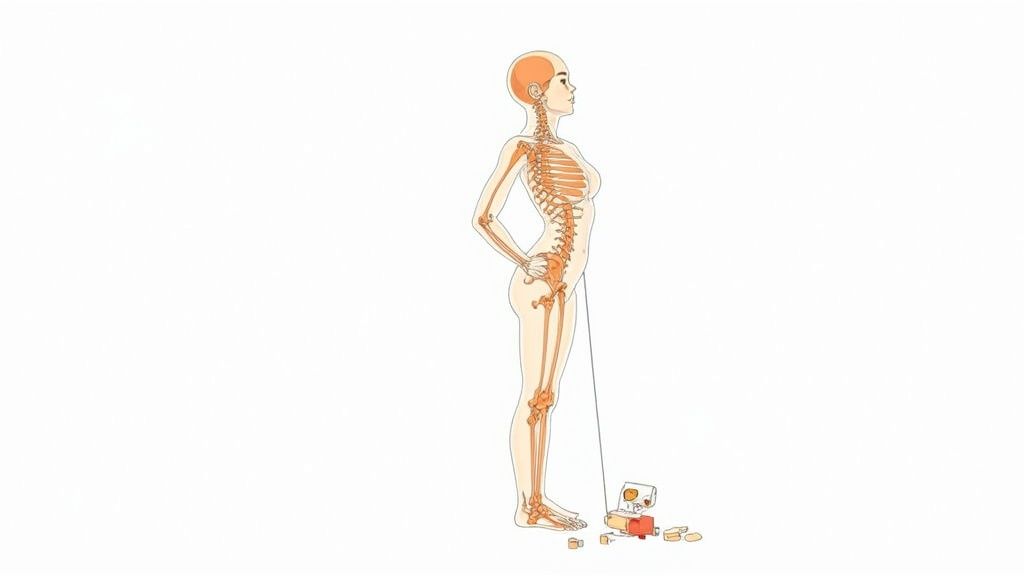
When we talk about getting stronger, our minds usually jump to muscles. But one of the most incredible benefits of resistance training for women happens on a much deeper anatomical level—it’s a direct conversation with your skeleton. This dialogue fortifies your bones against the natural curveballs of aging and hormonal shifts, building the very scaffold that supports a vibrant, active life.
Think of it this way: every time you do a squat or a press, your muscles contract and pull on the bones they're attached to. This mechanical tension is a gentle, productive stress that triggers a process called bone remodeling. It's the wake-up call for your bone-building cells, known as osteoblasts.
This signal tells the osteoblasts to get to work, depositing new minerals like calcium into the bone matrix. Over time, this consistent process makes your bones denser, stronger, and far more resilient. It’s a proactive investment in your future skeletal health.
Protecting Your Most Vulnerable Areas
This bone-building process is non-negotiable for women. As we navigate the hormonal shifts of perimenopause and menopause, declining estrogen levels can accelerate bone loss, dramatically increasing the risk for osteoporosis—a condition that makes bones dangerously brittle. Resistance training is our most powerful physiological tool to counteract this.
It specifically targets the areas most susceptible to age-related bone loss, like the hips and spine, giving you reinforcement right where you need it most.
- The Lumbar Spine: Exercises that load the axial skeleton, like deadlifts and weighted carries, help strengthen the vertebrae in your lower back.
- The Hips and Femoral Neck: Movements like squats and lunges place direct, beneficial stress on the hip bones, building density in a high-risk fracture area. To do this safely, you have to nail the basics, and you can learn more about how to master the basic squat to protect these crucial joints.
This targeted work helps build a robust skeletal structure ready to handle the demands of daily life and prevent serious injuries down the road.
Resistance training is your body's natural architect. It systematically rebuilds and reinforces your skeletal structure, creating a foundation that's not just strong but intelligently designed to last.
More Than Just Bones: The Connective Tissue Network
It doesn't stop at bone density. Resistance training also strengthens the entire connective tissue network that holds you together. Your tendons (which connect muscle to bone) and ligaments (which connect bone to bone) are made of tough collagen fibers that adapt and become more resilient right alongside your muscles.
This strengthening process creates more stable, durable joints. As your muscles get stronger, they act like a natural, dynamic brace, absorbing force and reducing the strain on the surrounding passive tissues. It's a key reason strength training is so often recommended for managing joint pain and lowering the risk of sprains. You're creating a powerful synergy where muscles, bones, and connective tissues all work together more effectively.
How Muscle Mass Rewires Your Metabolism
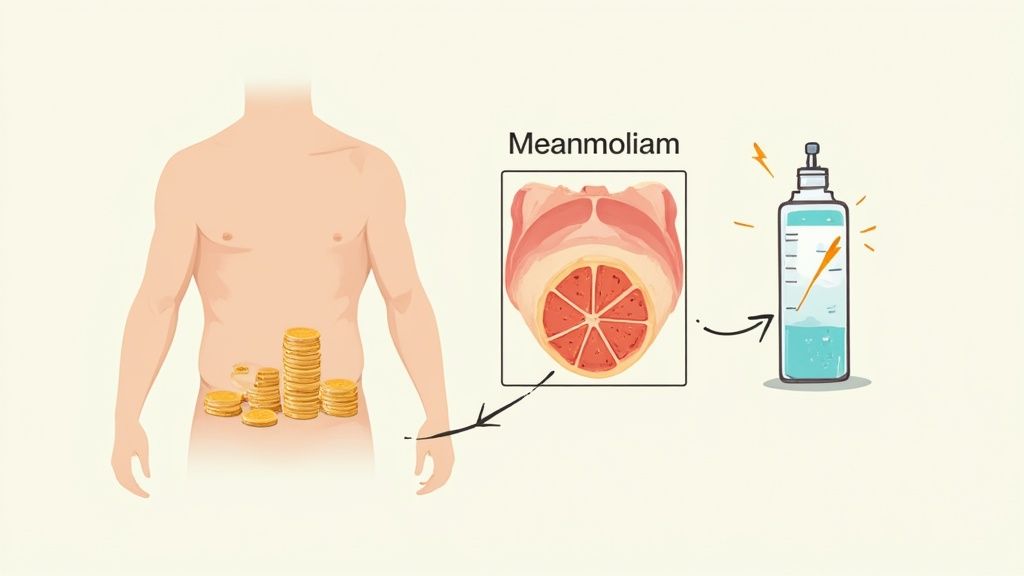
While strong bones give you a resilient frame, it’s the muscle attached to them that truly runs your body’s metabolic engine. The benefits of resistance training for women go way beyond just burning calories during a workout. It fundamentally rewires how your body manages energy at a cellular level, turning it into a more efficient, fat-burning machine.
Think of muscle tissue as a form of metabolic currency. The more of this valuable tissue you have, the more "spending power" your body has to burn calories, even at rest. That's because muscle is metabolically active, meaning its cells require a constant supply of energy (ATP) just to exist and perform basic functions.
This ongoing energy demand is what drives your basal metabolic rate (BMR)—the baseline number of calories your body burns at rest. Each pound of muscle you build increases your BMR, so your body naturally burns more calories around the clock. Cardio is great for burning calories while you're moving, but strength training builds the very anatomical machinery that keeps the fire burning 24/7.
Improving Your Body's Fuel Management System
One of the most powerful anatomical shifts from resistance training happens with your insulin sensitivity. Picture insulin as a key that unlocks your muscle cells to let glucose (blood sugar) in for energy. When your cells become resistant to that key, sugar gets left behind in the bloodstream, often leading to fat storage and raising the risk for metabolic syndrome and type 2 diabetes.
Resistance training makes your muscle cells much more receptive to that insulin key. During and after a workout, your muscles act like sponges, using specialized glucose transporters (like GLUT4) to soak up glucose from your bloodstream for fuel and repair, often without needing much insulin at all. This process dramatically improves your body's ability to manage blood sugar long-term, taking the strain off your pancreas and creating a more stable internal environment.
Resistance training doesn’t just build muscle; it teaches your body to be smarter with its fuel. It’s like upgrading your car from a gas-guzzler to an efficient hybrid, making every ounce of energy count.
Reshaping Your Body Composition from the Inside Out
Beyond the number on the scale, resistance training profoundly changes your body composition—the ratio of lean mass to fat. This is where it truly outshines other forms of exercise. It is uniquely skilled at targeting and reducing visceral fat, the dangerous, metabolically active fat that wraps around your internal organs.
While cardio is fantastic for your heart, resistance training is the master of building lean tissue (muscle hypertrophy). This one-two punch—reducing harmful visceral fat while building metabolically active muscle—is the key to a stronger, healthier physique. It not only boosts your metabolic health but also helps create a more toned and defined shape.
Of course, the work you do in the gym is only half the equation. The muscle repair and growth process, called protein synthesis, happens during rest. Understanding how muscle really works involves both the training stimulus and the crucial recovery period, which is why optimizing muscle growth during recovery is so important.
Here’s a quick look at how muscle impacts your metabolic machinery:
- Increased Resting Energy Burn: Every pound of muscle you build burns more calories at rest than a pound of fat, giving your daily energy expenditure a nice little boost.
- Enhanced Glucose Uptake: Trained muscles have more sensitive insulin receptors and glucose transporters, allowing them to pull sugar from the blood more effectively.
- Targeted Fat Reduction: Resistance training has a knack for burning visceral fat, the type directly linked to a host of metabolic diseases.
Ultimately, building muscle gives you direct control over your metabolic destiny. It offers a sustainable, anatomy-driven path to better health that cardio alone simply can't match.
The Mental and Emotional Gains of Getting Strong
Sure, building a resilient skeleton and a revved-up metabolism are huge anatomical wins from resistance training, but the gains go so much deeper than just the physical. Lifting weights, pulling bands, and mastering your own bodyweight are incredible tools for building mental and emotional strength, too, rooted in real changes to your brain chemistry and neural pathways.
Think about it. When you're in the middle of a tough set of squats, you have to be completely present. Your brain is zeroed in on your breath, your form, and the neuromuscular connection to the muscles doing the work. This intense focus is a powerful form of moving meditation. It quiets the prefrontal cortex—the part of the brain responsible for worry and rumination—and creates a space where the only thing that matters is the movement.
This mindful effort has a real, tangible effect on your body's chemistry. It helps regulate cortisol, our main stress hormone. By managing cortisol levels, strength training helps calm your entire nervous system, easing feelings of anxiety. At the same time, it cues the release of endorphins—those amazing, mood-boosting neurochemicals that act as natural analgesics and create a feeling of euphoria.
Forging Confidence Through Competence
One of the most profound shifts I see in women who start lifting is in their self-efficacy—a psychological term for the core belief in your own ability to get things done. Every single time you master a new exercise, add a little more weight, or push out one more rep than you thought you could, you’re strengthening neural pathways that reinforce your sense of capability.
This isn't just about a temporary mood boost. It’s about fundamentally rewiring how you see yourself.
That newfound competence doesn't just stay in the gym. It spills over into every part of your life, giving you more resilience and self-assurance when you're facing challenges at work, in your relationships, or with personal goals. It's no surprise that research consistently shows women who strength train report higher levels of confidence and a healthier body image.
Getting physically stronger is a powerful metaphor for the mind. It teaches you that with consistent effort, you can push through resistance, break past plateaus, and achieve things that once felt completely out of reach.
You start to trust your body and appreciate what it can do, shifting the focus away from just how it looks. This mental strength is just as real as the muscle you build.
A Sharper Mind and Deeper Sleep
The perks keep coming long after you've put the weights down, right into your cognitive function and your sleep architecture. The increased blood flow to your brain during a workout helps nourish brain cells and can promote neurogenesis (the creation of new neurons). Over time, this can lead to better focus, a sharper memory, and improved decision-making.
And let's talk about sleep. The physical work of strength training is one of the best things you can do to improve sleep quality. We know women are more likely than men to deal with sleep issues, and study after study shows that a regular resistance training routine is linked to deeper, more restorative sleep cycles.
It works in a few key ways:
- Hormonal Harmony: By helping manage stress hormones like cortisol, it makes it easier for your body to wind down and shift into a restful parasympathetic state.
- Temperature Cues: Your body temperature naturally drops a few hours after a workout, which is a powerful physiological signal to your brain that it's time to sleep.
- Pain Relief: Strengthening the muscles that support your joints can ease the chronic aches and pains that might otherwise disrupt sleep.
Ultimately, resistance training is a complete toolkit for your well-being. It calms your stress response, builds rock-solid confidence, sharpens your mind, and sets you up for truly rejuvenating rest. It’s proof that sometimes, the strongest gains are the ones you can’t even see.
Designing Your Personal Strength Blueprint
Knowing the anatomical benefits of resistance training is one thing; actually starting is another. It can feel like a huge leap from theory to action, but this is where we bridge that gap. We're going to break down how to get started safely and effectively, with simple templates that make strength training feel completely achievable, no matter where you're starting from.
The secret to getting stronger is a beautifully simple physiological principle: progressive overload. Think of it as an ongoing conversation with your muscles and nervous system. To keep forcing adaptation—and to keep seeing results—you have to gradually increase the demand over time. If you keep asking your muscles to do the same easy task, they have no reason to change.
This doesn't always mean piling on more weight. You can also add another rep (volume), do an extra set (volume), shorten your rest times (density), or simply perfect your form on an exercise (neuromuscular efficiency). The key is consistent, small steps forward. You can dive deeper into this crucial concept in our guide explaining what progressive resistance training is.
Building Your Foundation With Proper Form
Before you even think about picking up a heavy weight, your first job is to master proper biomechanics. Good form is everything. It ensures you’re working the target muscles through their full range of motion, and more importantly, it protects your joints from injury. It's the bedrock you'll build all your future strength upon.
Start by getting comfortable with the body's fundamental movement patterns:
- Squatting: The cornerstone of lower body strength, targeting the quadriceps, hamstrings, and glutes.
- Hinging: Think deadlifts. This pattern builds serious power in your posterior chain (glutes and hamstrings).
- Pushing: Push-ups and overhead presses build strength in your chest (pectorals), shoulders (deltoids), and triceps.
- Pulling: Rows and pull-ups are non-negotiable for a strong back (latissimus dorsi, rhomboids) and confident posture.
Focus on performing these with control and intention, using just your bodyweight at first. Film yourself or use a mirror to check your alignment—you might be surprised by what you see. Once your neuromuscular pathways for the movement feel solid, then you can start adding resistance.
This flowchart shows just how quickly lifting can shift your mental state, turning a moment of stress into a rush of strength and confidence.
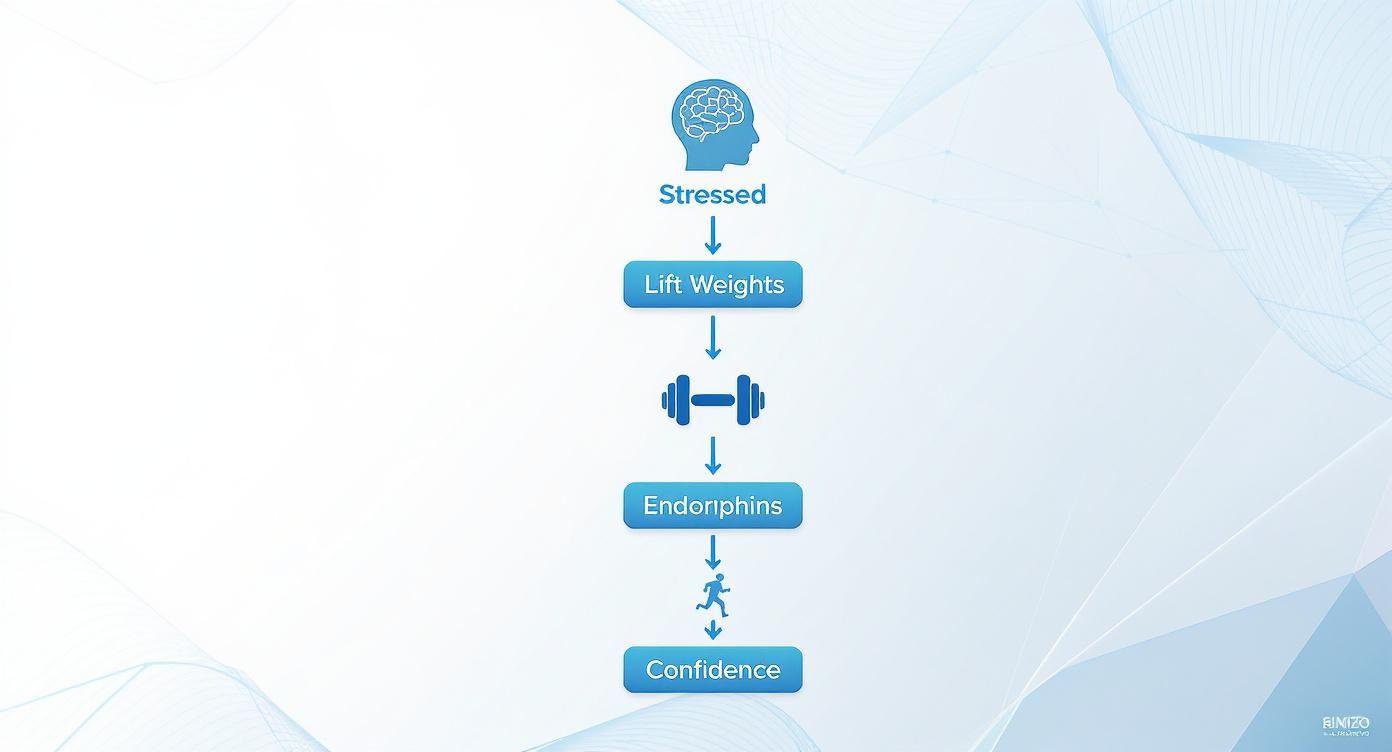
It’s a powerful visual reminder of the immediate psychological rewards. The physical act of lifting directly triggers positive neurochemical outcomes, from a feel-good endorphin release to a real sense of accomplishment.
Sample Program Templates for Every Woman
Every woman's life and body are unique, so your training plan should be, too. The following templates are starting points—think of them as basic recipes you can adapt to suit your own tastes and goals. Listen to your body and adjust as needed.
Here are a few sample resistance training programs designed for different women and their goals.
Sample Resistance Training Program Templates for Women
| Target Group | Focus | Sample Exercises (3x per week) | Progression Tip |
|---|---|---|---|
| The Beginner | Building foundational strength and mind-muscle connection without equipment. | Bodyweight Squats, Glute Bridges, Incline Push-ups (on wall/counter), Plank Hold. | Aim to add a few reps or seconds to your hold each week. Focus on flawless biomechanics. |
| The Busy Professional | Maximum efficiency using compound movements that work multiple muscle groups at once. | Dumbbell Goblet Squats, Dumbbell Romanian Deadlifts, Dumbbell Bench Press, Single-Arm Rows. | Once you hit your target reps easily, grab the next heaviest set of dumbbells to increase mechanical tension. |
| The Post-Menopausal Woman | Building bone density and joint stability with low-impact, high-value movements. | Weighted Glute Bridges, Seated Cable Rows, Wall Sits, Resistance Band Curls & Pull-Aparts. | Prioritize increasing reps and control before adding significant weight to protect joints and tendons. |
These templates are designed to be a launchpad for your strength journey. The most important thing is to start where you are and build from there, one strong rep at a time.
Your Top Strength Training Questions, Answered
Even knowing all the incredible benefits, it's totally normal to have a few questions before you start lifting. Let's tackle the most common ones I hear, breaking them down with clear, anatomy-focused answers to build your confidence from day one.
How Often Should I Be Strength Training?
For most women, hitting two to three full-body resistance training sessions per week is the sweet spot. This schedule gives you the perfect balance between stimulating muscle protein synthesis and giving your tissues the crucial time they need to recover and actually get stronger.
Think of it this way: your workout is the stimulus that tells your body to adapt. The real magic—the muscle repair and growth—happens on your rest days. If you train the same muscles every single day, you don't allow for adequate recovery, which can lead to overtraining, fatigue, and stalled progress.
By spacing your sessions out—say, on Monday, Wednesday, and Friday—you give your muscle fibers, connective tissues, and nervous system a full 48 hours to recover. This means you can come back to your next workout feeling refreshed and more resilient for the challenge ahead.
What’s the Best Way to Choose the Right Weights?
This is less about the number on the dumbbell and more about the quality of each repetition. The right weight is one that creates sufficient mechanical tension to challenge the muscle fibers, allowing you to complete all your reps with great form, where the last two or three feel genuinely difficult but are still possible.
If you can fly through your set without feeling the target muscle burn, the weight is too light to trigger adaptation. On the flip side, if your form starts to break down halfway through—maybe you're arching your back, using momentum, or feeling strain in your joints—it's too heavy and you risk injury.
The perfect weight challenges your muscles, not your joints. It should feel like productive work for the target muscle group, forcing it to engage deeply without compromising your skeletal alignment or control.
My advice? Start on the lighter side to really master the movement pattern and establish a strong mind-muscle connection. Once your form feels solid and automatic, you can gradually increase the weight until you find that sweet spot of challenging, high-quality effort.
What Should I Eat to Support My Training?
Nutrition provides the raw materials that power your workouts and rebuild your tissues. To support muscle repair and growth, your body needs two key macronutrients: protein and carbohydrates. And please, don't fall into the trap of fearing carbs—they are your muscles' preferred energy source.
-
Protein is for Repair: When you work out, you create tiny micro-tears in your muscle fibers. Protein provides the amino acids—the building blocks—needed to repair them, building them back even stronger. Try to include a source of lean protein—like chicken, fish, tofu, beans, or Greek yogurt—with each meal.
-
Carbohydrates are for Energy: Your body converts carbs into glucose and stores it in your muscles as glycogen. This is the primary fuel you burn during resistance training. Eating complex carbs like oats, quinoa, or sweet potatoes an hour or two before you train ensures your glycogen stores are full. This lets you generate more force and get so much more out of every session.
Hydration is also a complete non-negotiable. Your muscle tissue is about 75% water, so even slight dehydration can impair muscle contractility, strength, endurance, and recovery.
Will I Get Bulky From Lifting Weights?
This is probably the most persistent myth out there, and from an anatomical and hormonal perspective, the answer is a firm no. The "bulky" physique you might picture is the result of very specific, high-volume training, a highly controlled diet, and—most importantly—levels of testosterone that are much, much higher than women naturally produce.
A woman's hormonal makeup, with significantly less testosterone and more estrogen, makes it anatomically very difficult to build that kind of large-scale muscle hypertrophy. Instead, what resistance training does for women is build a strong, toned, and defined physique by developing lean muscle and reducing body fat.
The result isn't bulk; it's strength and shape. You'll build the kind of lean, metabolically active tissue that supports a healthy metabolism and creates a powerful, capable body.
Ready to build strength from the inside out with an approach designed for your body? WundaCore combines anatomy-informed coaching with sleek, effective equipment to bring the studio Pilates experience right into your home. Discover a smarter way to move and feel your best at https://wundacore.com.