
How to Improve Bone Density Naturally
To build stronger bones, you need a smart, two-pronged approach: the right kind of exercise combined with the right kind of nutrition. It’s a proven partnership. Weight-bearing and resistance work signals your bones to get stronger, while key nutrients like calcium, vitamin D, and protein provide the raw materials they need to actually do it.
Think of it as placing an order with your body’s construction crew and then making sure they have all the supplies to get the job done.
The Blueprint for Stronger Bones
Before we get into the "how," it's important to understand a core concept: your bones aren't static, inert pieces of scaffolding. They are living, dynamic tissues in a constant state of renewal. This process is called bone remodeling, and it's the key to naturally improving your bone density.
Picture a lifelong renovation project happening inside your skeleton, managed by two highly specialized cell types:
- Osteoclasts: This is your demolition team. Their job is to find and clear out old, worn-down bone tissue through a process called resorption.
- Osteoblasts: This is your construction crew. They come in right after the osteoclasts, laying down a fresh protein matrix (mostly collagen) which then mineralizes to become strong, new bone.
In a healthy skeleton, these two teams work in perfect harmony. But as we age or due to certain lifestyle habits, the demolition crew can start working faster than the builders can keep up. This imbalance leads to a net loss of bone mass, which can result in conditions like osteopenia or osteoporosis.
How Movement Shapes Your Skeleton
So, how do we get the construction team to work harder? The answer lies in a foundational principle of physiology known as Wolff's Law.
Wolff's Law: This principle states that bone adapts to the loads placed upon it. When you increase the load on a particular bone, it will remodel itself over time to become stronger and better able to resist that load.
Put simply, your bones get stronger when you challenge them. When you perform weight-bearing or resistance exercises, you’re creating mechanical stress that sends a direct message to your osteoblasts: "Hey, we need more reinforcement here!"
This is the most powerful and natural way to prompt your body to increase its bone mineral density. It’s a direct conversation between your muscles and your skeleton.
When you walk, jog, or do resistance training, the specific strain on your hips, spine, and leg bones triggers this bone-building response. This is precisely why a sedentary lifestyle can be so damaging to bone health—without these crucial signals, your body has no reason to invest its resources in maintaining a dense, resilient frame. A great way to apply this principle is through the power of progressive resistance training, which is all about systematically increasing the challenge to keep stimulating that growth.
Factors Influencing Your Bone Density
While movement is our primary tool, a few other key factors can influence how efficiently your internal bone-building factory operates.
Your genetics play a big part, setting the stage for your peak bone mass potential. If osteoporosis runs in your family, you might be predisposed to lower bone density. Similarly, people with smaller, thinner frames naturally start with a little less bone mass to begin with.
Hormones are also major players. In women, estrogen is critical for keeping that bone remodeling cycle in balance. The steep drop in estrogen during menopause is why bone loss often accelerates so quickly for postmenopausal women, throwing the osteoclast-osteoblast balance off-kilter. This makes proactive bone health strategies even more vital during this stage of life.
Finally, your daily lifestyle choices—from what you eat to habits like smoking or excessive drinking—can either support or sabotage your body’s ability to build and maintain strong bones. Understanding these factors sets the stage for the actionable steps we’ll dive into next.
The Movement Prescription For Building Denser Bones
To build stronger bones, we first need to understand a fundamental principle known as Wolff's Law. Put simply, bone adapts to the loads placed upon it. When you apply safe, targeted stress to your skeleton, you’re essentially sending a message to your body’s internal construction crew—the osteoblasts—telling them to get to work building new bone tissue.
Movement is the most direct and powerful tool you have to spark this essential remodeling process.
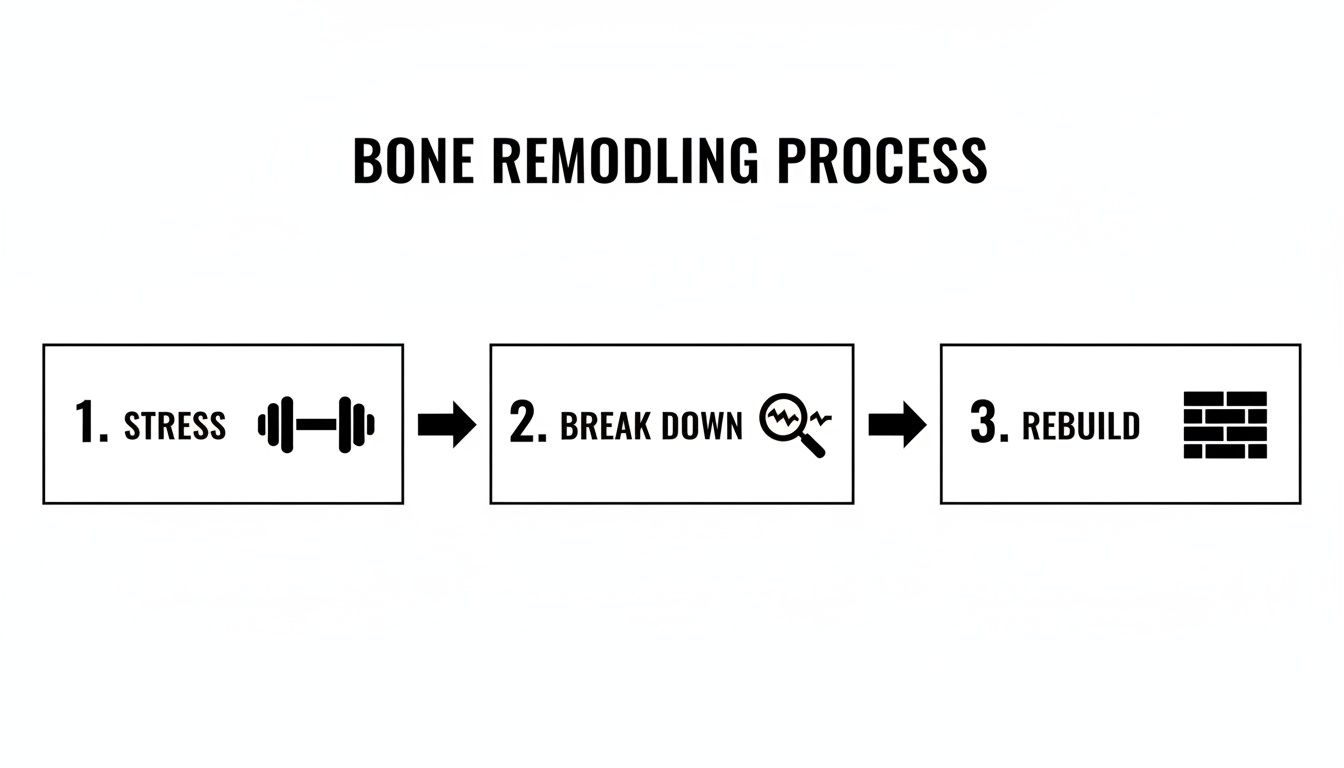
This cycle of stress, breakdown, and rebuilding is how your body reinforces its structure right where it's needed most. Mechanical stress is the catalyst.
The Three Pillars Of Bone-Building Exercise
A truly effective movement plan for bone health isn't just about high-impact jumping. It's a strategic blend of three specific types of exercise, each playing a unique and vital role in creating a resilient frame.
-
Weight-Bearing Exercises: These are any activities you do on your feet, forcing your bones and muscles to work against gravity. Think of brisk walking, hiking, dancing, or even standing Pilates routines. This constant, low-level force is a crucial signal for the bones in your hips, spine, and legs to maintain their strength.
-
Resistance Training: This is where you move your body against an opposing force, like weights, resistance bands, or a Pilates ring. This is how you create targeted mechanical loads that are incredibly effective at stimulating bone growth in specific, often vulnerable, areas. You're creating tension to provoke adaptation.
-
Balance Work: While balance exercises don't directly build bone density in the same way, they are absolutely critical. By improving your stability and proprioception (your body's awareness in space), you drastically reduce your risk of falls—the number one cause of fractures in people with low bone density.
Putting It Into Practice With WundaCore
Generic advice like "do more exercise" just doesn't cut it. To really make a difference, the movements need to be precise, controlled, and progressive. This is where an anatomy-informed method like WundaCore truly shines.
Take a WundaCore Ring Squeeze between the inner thighs, for example. On the surface, it’s an adductor exercise. But if you look deeper, the targeted muscular contraction sends a direct compressive force into your femur heads and hip sockets—two areas highly susceptible to osteoporotic fractures. You are applying a direct stimulus for bone growth exactly where it counts.
The same goes for standing leg work with a WundaCore Loop around your ankles. The resistance doesn't just strengthen your glutes; it creates a pulling force on the bones of your pelvis and legs. This tension is a clear signal for your osteoblasts to get busy reinforcing that area. The goal is to make every movement a deliberate message to your skeleton.
Resistance training is a cornerstone of building denser bones. To learn more about effective approaches, you can explore these smarter resistance training strategies.
The Power Of Progressive Overload
Your bones, just like your muscles, adapt over time. A workout that felt challenging last month might not provide the same bone-building stimulus today. This is why the principle of progressive overload is so important.
It simply means gradually and methodically increasing the demands on your musculoskeletal system. You don't have to lift heavy barbells to do this.
You can progress by:
- Adding more repetitions to an exercise
- Increasing the resistance (like moving to a stronger WundaCore Loop)
- Improving your range of motion with control
- Challenging your balance in new ways
The key is consistent, incremental challenges that keep your osteoblasts engaged and working. This methodical approach is central to understanding the benefits of resistance training for women, especially for maintaining bone density through every stage of life.
While low bone mineral density (LBMD) is a huge global challenge, the good news is that we're making progress. Resistance-based exercise like Pilates is a powerful tool in this fight, naturally boosting BMD by stimulating osteoblasts through controlled loading. Research consistently shows that weight-bearing activities can increase hip and spine BMD by 2-4% over 12 months in at-risk groups. This is especially critical for postmenopausal women, a group where 30% of Caucasian US women over 50 have osteoporosis and 54% have osteopenia.
Your Weekly Bone-Building Movement Plan
Creating a balanced routine is key to staying consistent and seeing results. It's not about going all-out every day; it's about smart, regular practice where you prioritize form over speed.
Here is a sample schedule that integrates WundaCore principles for balanced bone stimulation.
| Day | Focus | Example WundaCore Session | Duration (Minutes) |
|---|---|---|---|
| Monday | Full-Body Resistance & Weight-Bearing | Standing Mat Flow with Ring | 30-40 |
| Tuesday | Active Recovery & Balance | Gentle Stretch & Core Stability | 20-25 |
| Wednesday | Lower Body & Hip Strength | Glute & Thigh Focus with Loop | 30-35 |
| Thursday | Active Recovery & Balance | Dynamic Stretching & Mobility | 20-25 |
| Friday | Upper Body & Spine | Arms, Back & Core with Ring & Block | 30-35 |
| Saturday | Weight-Bearing Cardio | Brisk Walk or a Wunda On Demand Dance Class | 45-60 |
| Sunday | Rest | Full Rest or Gentle Stretching | As needed |
This plan ensures you're stimulating different parts of your skeleton throughout the week while also building in crucial time for recovery and balance work. It’s a complete prescription for stronger bones.
Fueling Your Frame With Bone-Building Nutrition
Think of your workouts as the architect's plan for a stronger skeleton. The movements send signals telling your body exactly where to reinforce the structure. But even the most brilliant blueprint is useless without the right building materials.
That’s where nutrition comes in. It delivers the concrete, steel, and support beams your body needs to actually follow the plan and build denser, more resilient bones. It’s not just about drinking more milk; it’s about creating a strategic partnership between several key nutrients that work together in the complex process of bone remodeling.
The Calcium and Vitamin D Partnership
Calcium is famous for a reason—it’s the primary mineral that gives your bones their hardness and strength. An adult over 60 should aim for at least 1,200 milligrams of calcium daily. But just eating calcium-rich foods is only half the battle.
Without its essential partner, Vitamin D, most of that calcium can't even get into your bloodstream to be used. Think of Vitamin D as the gatekeeper for calcium absorption. It unlocks the doors in your gut, allowing calcium to pass through and become available for your bones.
Where to find them:
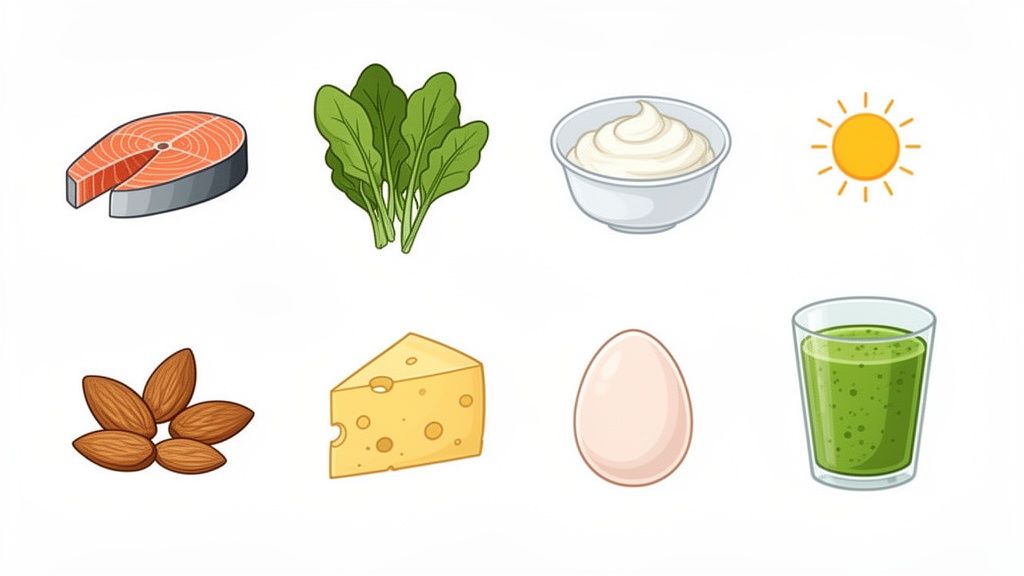
- Calcium: Dairy (yogurt, kefir, cheese), dark leafy greens (kale, collards), almonds, and fortified plant-based milks.
- Vitamin D: Fatty fish (salmon, mackerel), egg yolks, and fortified foods. Your body also makes it when your skin is exposed to the sun.
Vitamin K2: The Traffic Cop for Calcium
Once calcium is in your bloodstream, it needs direction. This is where Vitamin K2 steps in, acting like a crucial traffic cop for your minerals. Its main job is to activate special proteins that direct calcium precisely where you want it to go—into your bones and teeth.
Just as importantly, it helps prevent calcium from getting deposited in places you don't want it, like your arteries and soft tissues. This makes Vitamin K2 a non-negotiable player for both skeletal and cardiovascular health.
By making sure calcium lands in your bone matrix, Vitamin K2 helps complete the bone-remodeling cycle that your exercises kicked off.
You’ll find this vital nutrient in fermented foods like natto (a traditional Japanese soybean dish), certain cheeses like Gouda and Brie, as well as egg yolks and grass-fed butter.
Magnesium and Protein: The Unsung Heroes
While calcium gets the spotlight, other nutrients provide critical support for the entire structure.
Magnesium is involved in over 300 biochemical reactions in your body, including converting Vitamin D into its active form. Without enough magnesium, your body can't effectively use the Vitamin D you get, which slams the brakes on calcium absorption. It’s a key piece of the puzzle you can find in sweet potatoes, nuts, seeds, and dark chocolate.
Protein is just as vital. It forms the flexible collagen matrix of your bone—the very framework that minerals like calcium bind to. If your diet lacks protein, your body doesn't have the scaffolding it needs to build new bone, no matter how much calcium you consume. Focus on lean sources like fish, poultry, beans, and tofu to support this foundational structure.
Historical data paints a stark picture here. Studies on low-income women in India show 52% with osteopenia and 29% with osteoporosis, largely due to these kinds of dietary gaps. But the great news is that this is reversible. Combining smart nutrition with weight-bearing exercise has been proven to increase bone mineral density by 1-5% in the lumbar spine and hips after just 6-12 months.
Dietary Habits That Sabotage Bone Health
What you don’t eat is just as important as what you do. Certain habits can actively work against you by leaching minerals from your system.
Be mindful of these culprits:
- Excessive Sodium: A high-salt diet can increase how much calcium your body flushes out through urine, directly depleting your mineral stores.
- High Sugar Intake: Diets packed with sugar and processed foods can lead to chronic inflammation, which disrupts the delicate balance of bone remodeling.
- Too Much Caffeine: While a morning coffee is fine, excessive caffeine has been linked to reduced calcium absorption.
Bringing in foods rich in anti-inflammatory compounds, like those found in the anti-inflammatory benefits of olive oil, can help cool down systemic inflammation that might be hurting your bones. By focusing on whole foods, you not only provide the necessary building blocks but also create an internal environment that supports, rather than hinders, bone growth.
Strong bones aren't built in the studio alone. What you do between workouts—how you sleep, manage stress, and live your day-to-day life—creates the environment where your bones either thrive or struggle.
Think of your exercise and nutrition plan as the active construction crew for your skeleton. Your daily habits? That’s the job site. A well-managed site allows the crew to work efficiently, but a chaotic one undermines all their hard work. Creating a supportive lifestyle is the final, critical piece of the puzzle for improving bone density naturally.
The Hidden Saboteurs of Bone Density
A few common habits can quietly tip the scales toward bone loss by directly interfering with your body’s bone remodeling cycle. Understanding exactly how they do this is the first step to making a real change.
-
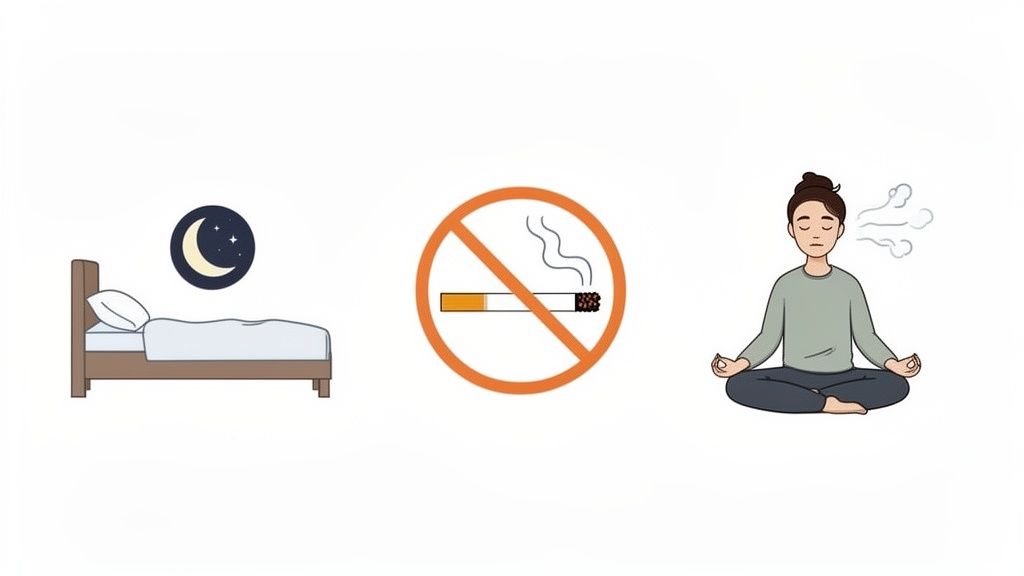
Smoking: Nicotine acts as a direct toxin to your osteoblasts—the very cells responsible for building new bone. It cripples their ability to lay down fresh tissue and constricts blood vessels, starving your skeleton of the oxygen and nutrients it needs to stay strong.
-
Excessive Alcohol: More than a drink or two here and there can seriously disrupt your body's calcium balance. It messes with the pancreas and liver, which in turn hampers your ability to absorb both calcium and vitamin D—the non-negotiable building blocks of dense, healthy bone.
These aren't just abstract health warnings; they have a direct, measurable impact. The great news is that avoiding them is one of the most powerful moves you can make. In fact, large-scale studies show that as habits like smoking have declined over the past 30 years, bone mineral density in the population has significantly improved.
Why Quality Sleep Is a Bone-Building Activity
It’s easy to dismiss sleep as just "rest," but for your bones, it’s prime time for construction. During deep sleep, your body releases a surge of human growth hormone (HGH), a key player that stimulates those bone-building osteoblasts and promotes tissue repair.
When you consistently skimp on sleep, you blunt that HGH release. It's like telling your internal construction crew to take the night off. The bone-building side of the equation slows down, while the breakdown process continues.
Aiming for 7-9 hours of quality sleep isn't just about feeling energized. It’s a non-negotiable part of any serious bone-strengthening plan, giving your body the restorative time it needs to heal and rebuild.
Managing Stress to Protect Your Skeleton
Chronic stress has a surprisingly direct and damaging effect on your bones, and it all comes down to a hormone called cortisol. While helpful in short bursts, a constant flood of cortisol from ongoing stress puts your body in a catabolic (breakdown) state.
High cortisol levels directly inhibit your bone-building cells and can even accelerate the activity of osteoclasts, the cells that break down old bone. Over time, this hormonal imbalance creates a perfect storm for bone loss.
Bringing intentional stress-management techniques into your routine is a practical, powerful way to support your skeleton. Anything that lowers cortisol helps create a healthier hormonal environment for your bones to thrive.
Simple Ways to Lower the Stress Response:
- Mindful Breathing: Even just a few minutes of deep, slow belly breathing can instantly calm your nervous system.
- Gentle Movement: Activities like stretching or restorative Pilates are fantastic for releasing physical tension. Our guide on osteoporosis and Pilates explores how this mindful approach benefits both body and mind.
- Get Outside: Spending time in nature is a proven way to lower cortisol and boost your sense of well-being.
By weaving these simple habits into your life, you create a complete support system for your bones. It ensures that all the effort you put into your workouts and nutrition can deliver the powerful results you’re working toward.
Tracking Your Progress and Making It Stick
You now have the roadmap for how movement and nutrition signal your body to build stronger bone. The real magic, though, happens when you weave these ideas into your daily life. When it comes to bone density, consistency is king—it’s far more powerful than occasional, intense efforts.
The trick is turning this knowledge into simple, repeatable habits. This requires a solid plan and a clear way to see what's actually working. This is how you shift from simply knowing the theory to seeing real, tangible results in your own health.
How to Measure Your Bone Density
The gold standard for checking your bone mineral density (BMD) is a DEXA scan, which stands for Dual-Energy X-ray Absorptiometry. Don't let the long name intimidate you; it's a quick, painless, low-radiation test that gives you a crystal-clear picture of the bone density in crucial areas like your hip and spine. Think of it as a progress report for your skeleton.
A DEXA scan isn't for everyone, but it's generally recommended for:
- Women aged 65 or older.
- Postmenopausal women under 65 who have other risk factors.
- Anyone who has fractured a bone after age 50 from a minor fall or trauma.
- People with medical conditions or on medications known to impact bone health.
The first step is always a conversation with your doctor. They can help you decide if a DEXA scan is the right move for you and help build a strategy based on your personal health picture.
What Does My T-Score Mean?
After a DEXA scan, you'll get a T-score. This number is simply a comparison of your bone density to that of a healthy 30-year-old at their peak bone mass. It’s a straightforward way to see where you stand.
Here’s a quick guide to understanding the numbers:
- -1.0 or Above: This is considered normal bone density. Great news!
- Between -1.0 and -2.5: This range indicates osteopenia, which is just a term for low bone mass. It's a warning sign that your bones are weaker than ideal, but not yet at the osteoporosis stage.
- -2.5 or Below: This score indicates osteoporosis. It means your bone density is significantly reduced, and your risk of fracture is much higher.
Your T-score isn’t just a label. It's a powerful piece of information. It gives you a baseline so you and your doctor can track how well your new habits are working over time.
Your Daily Bone Health Checklist
Knowing your numbers is empowering. Now, let's bring it all together into a simple, daily framework. This isn’t about chasing perfection; it’s about making conscious, bone-friendly choices most of the time.
Think of this as your daily check-in:
- Did I move with purpose today? Think weight-bearing or resistance-based activity. This could be a WundaCore session, a brisk power walk, or even just dancing in your kitchen.
- Did I fuel my bones? Aim to get sources of calcium, Vitamin D, and protein into your meals. Leafy greens, yogurt, and fatty fish are all fantastic choices.
- Did I support my system? This means prioritizing good sleep and finding ways to manage stress, which can have a bigger impact on bone than you might think.
- Did I avoid the saboteurs? Keep an eye on excessive sodium, sugar, and alcohol, as they can work against your bone-building efforts.
This simple checklist takes the big, abstract goal of "improving bone density" and breaks it down into small, achievable actions. By ticking these boxes consistently, you create a powerful ripple effect that supports a strong, resilient skeleton for years to come.
Your Questions on Bone Density, Answered
When you decide to take charge of your bone health, a lot of practical questions pop up. It's one thing to know the principles, but it's another to figure out how they apply to your body, your life, and your expectations. Let's dig into some of the most common questions I hear from clients.
Can You Really Increase Bone Density After Menopause?
Yes, you absolutely can. It's a common myth that once menopause hits, the game is over for your bones. While it's true that the hormonal shifts can speed up bone loss, your skeleton never loses its incredible ability to adapt and remodel.
Think of it this way: Wolff's Law, a core principle in anatomy, states that bone adapts to the loads placed upon it. That law doesn't expire at 50! By consistently applying the right kind of stress through targeted resistance and weight-bearing exercise, you’re sending a direct signal to your osteoblasts (the cells that build bone) to get back to work. It might be a slower process than in your 30s, but make no mistake—improvement is entirely possible. You're waking up a sleepy construction crew, not trying to build on an abandoned lot.
What Is The Best Single Exercise For Bone Density?
This is a question I get all the time, and while there's no single magic bullet, some exercises give you more bang for your buck. If I had to pick just one type of movement, it would be controlled resistance training that specifically loads the hips and spine. Why? Because these are the areas most vulnerable to fracture.
An exercise like a weighted squat or a standing leg press on a Pilates reformer creates a direct mechanical force through your femur and vertebrae. That force is a powerful message telling those bones they need to get stronger and more dense.
The secret is the quality of the load, not just the impact. A controlled, challenging resistance movement sends a much clearer signal for bone growth than many high-impact activities that can just end up stressing your joints.
How Long Does It Take To See Results?
This is where patience becomes your superpower. Bone remodeling is a slow, methodical biological process. It’s not like building muscle, where you might see and feel changes within a few weeks. To see a measurable change on a DEXA scan, you typically need at least 12 to 24 months of consistent, dedicated work.
Please don't let that timeline discourage you! The other benefits show up much, much faster. You'll notice improvements in your muscle strength, balance, and overall stability in a matter of months. Each of those gains dramatically reduces your risk of a fall, which is a huge win in itself. Trust the process. Every healthy meal and every workout is a deposit in your bone bank, building a stronger foundation for your future.
Ready to put these principles into practice with a system designed for smarter, anatomy-informed movement? WundaCore provides the tools and expert guidance to help you build strength from the inside out. Explore our equipment and Wunda On Demand classes to start your journey to a more resilient body today. Learn more at https://wundacore.com.